Benefits
Memofix Benefits: What It Is Made to Support
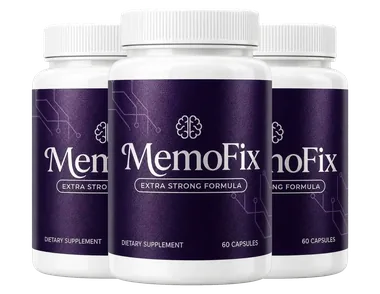
Memofix is made to support memory, concentration and long-term cognitive well-being.
Among its ingredients, bacopa has the best research, with small recall and attention gains in 12-week studies. Each serving gives 200 mg.
The claims
What benefits does the Memofix sales page claim?
The sales page lists four benefit lines, and its title calls Memofix "A simple and natural method for cognitive support."
These are the seller's words, not ours and not a finding. The table quotes each line and names the kind of evidence it would need.
| Claim (sales page, word for word) | What it would take to show | Memofix trial? |
|---|---|---|
| "Improved memory and better concentration" | A placebo-controlled trial measuring recall and attention | None published |
| "Support for brain and cognitive health" | A general structure-function claim; still needs reliable evidence | None published |
| "Carefully selected natural herbs for mental clarity" | Evidence that each herb helps clarity at this dose | None published |
| "Long-term memory and cognitive well-being" | A trial lasting many months or years | None published |
| "Extra Strong Formula" (label) | A defined standard for strength | No standard given |
The FTC expects health claims to rest on competent and reliable science, usually randomized human trials (FTC, Health claims).
Brand graphic
What does the "What Memofix Supports" graphic promise?
The graphic turns the sales-page lines into check boxes next to a woman writing at a desk.
Check boxes look like results, but nothing was checked. No one measured memory or concentration before and after taking Memofix. The image is a design choice.
- The person pictured is a model
- The ticks repeat claims, not findings
- No study, number or date appears in the art
We publish no customer ratings either, because none have been verified. The Memofix reviews page explains why.

Bacopa at 200 mg
Does the bacopa in Memofix support the memory claim?
Bacopa is the only Memofix ingredient with fair evidence for memory, and even that evidence is modest. It also comes from higher doses than Memofix uses.
In six 12-week trials at 300 to 450 mg a day, people did better on 9 of 17 free-recall measures than on placebo (Pase et al., 2012). A pooled analysis of 518 people found attention tasks got a few milliseconds faster (Kongkeaw et al., 2014). Those are real but small changes, the sort you might not notice day to day.
The closest thing to support for "Improved memory," with two limits: Memofix gives 200 mg, and the extract strength is not printed.
Rhodiola at 100 mg
Does the rhodiola in Memofix support mental clarity?
Rhodiola evidence for clarity is weak. The dose is right, but the research beneath it is shaky.
Studies disagree
Results were contradictory, and the positive trials were never repeated by an independent group (Hung et al., 2011).
Not shown useful
NCCIH finds too little reliable evidence for any health use (NCCIH, Rhodiola).
If rhodiola has an effect, the research points toward fatigue, not memory.
L-theanine at 100 mg
Does the L-theanine in Memofix support concentration?
L-theanine has some support for stress, which can affect concentration, but at twice the Memofix dose. A four-week trial of 200 mg a day in 30 healthy adults lowered stress scores and lifted some thinking scores (Hidese et al., 2019).
A wider review put the useful range for stress at 200 to 400 mg (Williams et al., 2020). At 100 mg, Memofix gives half the low end. A smaller effect, or none, is possible.
Notice the link in the chain. The claim is "better concentration," but the trial result is lower stress. Feeling calmer may help some people focus. It is not the same as a measured gain in concentration.
Ginseng at 90 mg
Does the ginseng in Memofix support cognitive health?
The best evidence says ginseng does little for thinking in healthy people. The Cochrane review of nine trials found no convincing effect (Geng et al., 2010 (Cochrane)).
NCCIH reports a possible benefit in middle-aged adults, with none seen in young adults. In some positive studies, memory gains seemed tied to added ginkgo rather than ginseng (NCCIH, Asian ginseng). Memofix contains no ginkgo. At 90 mg, it sits just under the low end of common doses (LiverTox, Ginseng).
BCAAs at 540 mg
Do the BCAAs in Memofix add any benefit?
We found no evidence that BCAAs help memory or concentration at any dose. They were studied for muscle and exercise, at 10 to 14 g a day, with inconsistent results (ODS, Exercise supplements).
At 540 mg, the BCAA line is the heaviest part of each serving and the least tied to the sales claims. Any normal meal with protein supplies more.
Realistic view
What is a realistic benefit from Memofix?
A realistic hope is a small change, if any, that shows up slowly. The long-term claim goes beyond what any ingredient study measured.
Reasonable to hope for
- A slight edge on recall tasks after months of daily use, based on bacopa
- Feeling a bit less stressed, based on L-theanine and rhodiola research
- A simple daily routine with a full label you can check
Not supported
- Clear memory gains in days or weeks
- Protection of memory over years
- Help for any memory disease
- Any added benefit from the BCAAs
The results timeline maps what might happen week by week. The ingredients breakdown has the dose comparisons in one table.
"Natural herbs"
Does "natural" make Memofix a safer benefit?
No. The sales page stresses "Carefully selected natural herbs," but natural has no legal definition for supplements, and plant extracts can still cause side effects.
Bacopa can upset the stomach (LiverTox, Bacopa). Ginseng can keep people awake and may lower blood sugar (NCCIH, Asian ginseng). Rhodiola has a reported interaction with a blood pressure drug (NCCIH, Rhodiola). None of that makes Memofix unsafe for most healthy adults. It does mean a benefit has to be weighed against your medicines.
Memofix is a dietary supplement, not a drug. Ginseng may lower blood sugar and has mixed reports with warfarin; rhodiola was reported to interact with losartan. Ask your doctor or pharmacist first if you take blood thinners, diabetes, blood pressure or mood medicines. See side effects and interactions.
The full list is on the Memofix side effects page.
Your test
How to judge Memofix benefits for yourself
Keep it simple and honest with yourself. Write down how your focus, stress and sleep feel before you start, then check again at weeks 4 and 8.
Change one thing
Start Memofix without adding other new supplements, so you know what you are testing.
Track the basics
Sleep, exercise and stress shift focus more than most capsules. Note them too.
Decide before day 60
If you notice nothing, the 60-day guarantee lets you ask for your money back by calling +1 (302) 200-3480.
Getting lost in familiar places or repeating the same questions are signs to see a doctor, not to try a new capsule (NIA, Memory problems).
FAQ
Memofix benefits FAQ
Has Memofix been tested in a clinical trial?
No. No trial of Memofix has been published. The research cited here studied single ingredients.
Will Memofix help my memory?
Nobody can promise that. Bacopa showed small recall gains after 12 weeks at higher doses than Memofix uses (Pase et al., 2012).
Can Memofix prevent memory loss with age?
No evidence shows that. The National Institute on Aging recommends no supplement for preventing decline (NIA, Cognitive health).
Does Memofix help with stress?
Two of its ingredients, L-theanine and rhodiola, were studied for stress or fatigue. L-theanine is at half its trial dose, and rhodiola evidence is weak.
How soon would I notice Memofix benefits?
Unknown for this product. Bacopa trials measured results at 12 weeks, which is longer than the 60-day refund window.
Are there Memofix customer reviews?
None have been verified, so this site prints no ratings or quotes. See our reviews page.
Keep reading
More about Memofix
Ingredients
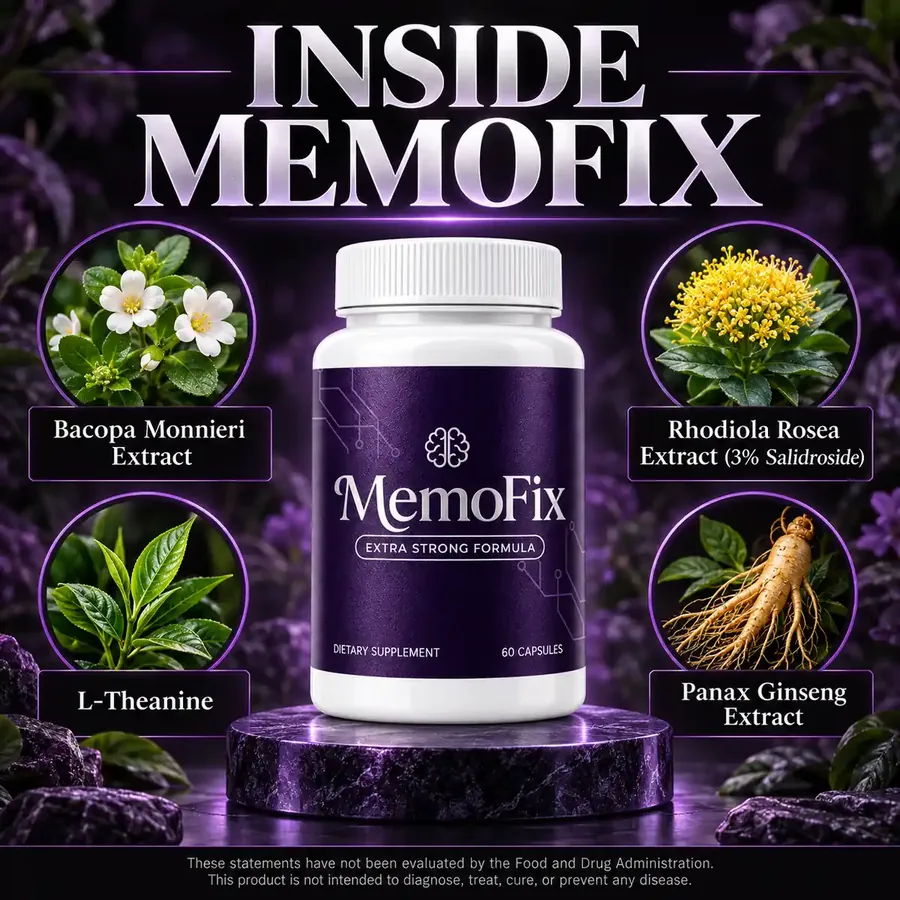
Each Memofix ingredient with its amount per serving, what studies used and what those studies measured.
Read more
Results timeline
No product trial, 12-week bacopa studies and a 60-day refund window: how to plan and track an honest trial.
Read moreReviews
Why we print no stars or quotes, how to spot fake memory-supplement reviews, and how to test Memofix fairly yourself.
Read moreUSA Authorized Memofix Retailer
Ready to try Memofix with the 60-day guarantee?
Order through the authorized retailer's page so your order ID is on file with the refund desk. Two capsules a day; the 2-bottle pack covers the whole 60-day window.
Questions before you buy? Call +1 (302) 200-3480. 60-day money-back guarantee, return shipping paid by the buyer.