Safety
Memofix Side Effects and Who Should Ask First
Memofix side effects come from what is known about its ingredients.
Bacopa can upset the stomach, rhodiola and ginseng can disturb sleep, and ginseng may lower blood sugar and has mixed reports with warfarin. Pregnant or nursing women, anyone under 18 and people with a medical condition should ask a physician first.
See who Memofix suits.
The short version
Does Memofix have side effects?
Memofix can cause side effects, although no study of the finished product has measured them. What we know comes from research on its five ingredients. Most reported effects are mild: stomach upset, headache, dry mouth and trouble sleeping.
The bigger concern for many adults is medicines. Two ingredients, Panax ginseng and rhodiola, have reported drug interactions. Those matter more than the mild effects if you take a blood thinner, a diabetes drug or a blood pressure drug.
Memofix is a dietary supplement, not a drug. Ginseng may lower blood sugar and has mixed reports with warfarin; rhodiola was reported to interact with losartan. Ask your doctor or pharmacist first if you take blood thinners, diabetes, blood pressure or mood medicines. See side effects and interactions.
The amounts in Memofix are at or below the doses used in research, which may lower the chance of side effects. That is a reasonable guess, not a guarantee.
Ingredient by ingredient
Which Memofix ingredients cause which side effects?
Each row lists the Memofix amount, the effects that research or health agencies report, and the source. Mild and short-lived effects are the most common.
| Ingredient (per 2 capsules) | Reported side effects | Interactions and cautions |
|---|---|---|
| Bacopa monnieri extract, 200 mg | Stomach pain, nausea, diarrhea, dry mouth, headache (LiverTox, Bacopa) | Unlikely to harm the liver (LiverTox, Bacopa) |
| Rhodiola rosea extract, 100 mg | Dizziness, headache, insomnia, dry mouth (NCCIH, Rhodiola) | Reported interaction with losartan; possibly safe up to 12 weeks (NCCIH, Rhodiola) |
| L-theanine, 100 mg | No NIH safety fact sheet | Studied at 200-400 mg for stress (Williams et al., 2020) |
| Panax ginseng extract, 90 mg | Insomnia, nausea, diarrhea, headache (LiverTox, Ginseng) | May lower blood sugar; may be unsafe in pregnancy (NCCIH, Asian ginseng); warfarin reports mixed (NCCIH, Herb-drug interactions) |
| BCAAs 2:1:1, 540 mg | None specific at this amount | Up to 20 g a day looks safe in studies (ODS, Exercise supplements) |
Bacopa
Can the bacopa in Memofix upset your stomach?
Yes, it can. Bacopa's most common side effects are stomach pain, nausea and diarrhea, along with dry mouth and headache. The National Institutes of Health's LiverTox summary calls these effects minor and short-lived (LiverTox, Bacopa).
Memofix has 200 mg of bacopa per serving, below the 300-600 mg that LiverTox calls typical. The label asks for 2 capsules 20-30 minutes before a meal, so they may reach an empty stomach. If that bothers you, the label allows another plan "as directed by your healthcare professional." Ask your doctor before you change the timing.
LiverTox also notes that bacopa has not been shown to treat any disease in adequate trials (LiverTox, Bacopa). The Memofix ingredients page covers what bacopa research does show.
Rhodiola and ginseng
What side effects do rhodiola and ginseng in Memofix cause?
Both herbs can affect sleep, and both have reported medicine interactions.
Dizziness, sleep trouble and one blood pressure drug
The National Center for Complementary and Integrative Health lists dizziness, headache, insomnia and dry mouth. It says rhodiola is possibly safe for up to 12 weeks, and it notes a reported interaction with losartan, a common blood pressure medicine (NCCIH, Rhodiola).
Insomnia, blood sugar, warfarin and pregnancy
Insomnia is the most common side effect of Asian ginseng. It may lower blood sugar and may be unsafe in pregnancy (NCCIH, Asian ginseng). One case showed a weaker warfarin effect (LiverTox, Ginseng), and later studies of the pair are mixed (NCCIH, Herb-drug interactions).
Ginseng may also interact with some blood pressure drugs, statins and antidepressants (NCCIH, Herb-drug interactions). The blog post on ginseng and your medicines goes through each class.
Medicines
Which medicines can interact with Memofix?
Blood thinners, diabetes medicines, some blood pressure drugs, statins and antidepressants are the ones to check. The table links each to the Memofix ingredient involved.
| Medicine type | Memofix ingredient | What is reported | What to do |
|---|---|---|---|
| Warfarin (blood thinner) | Panax ginseng | One case of reduced effect; later studies mixed (LiverTox, Ginseng) (NCCIH, Herb-drug interactions) | Ask your prescriber; blood tests may need checking |
| Diabetes medicines | Panax ginseng | May lower blood sugar (NCCIH, Asian ginseng) | Ask first; watch for low blood sugar |
| Losartan | Rhodiola | Interaction reported (NCCIH, Rhodiola) | Ask your prescriber before use |
| Other blood pressure drugs | Panax ginseng | Possible interaction (NCCIH, Herb-drug interactions) | Ask your pharmacist |
| Statins | Panax ginseng | Possible interaction (NCCIH, Herb-drug interactions) | Ask your pharmacist |
| Antidepressants | Panax ginseng | Possible interaction (NCCIH, Herb-drug interactions) | Ask your prescriber |
This list is not complete. Show the full Memofix label to your pharmacist along with every medicine and supplement you take.
The label
Who does the Memofix label say should ask a physician first?
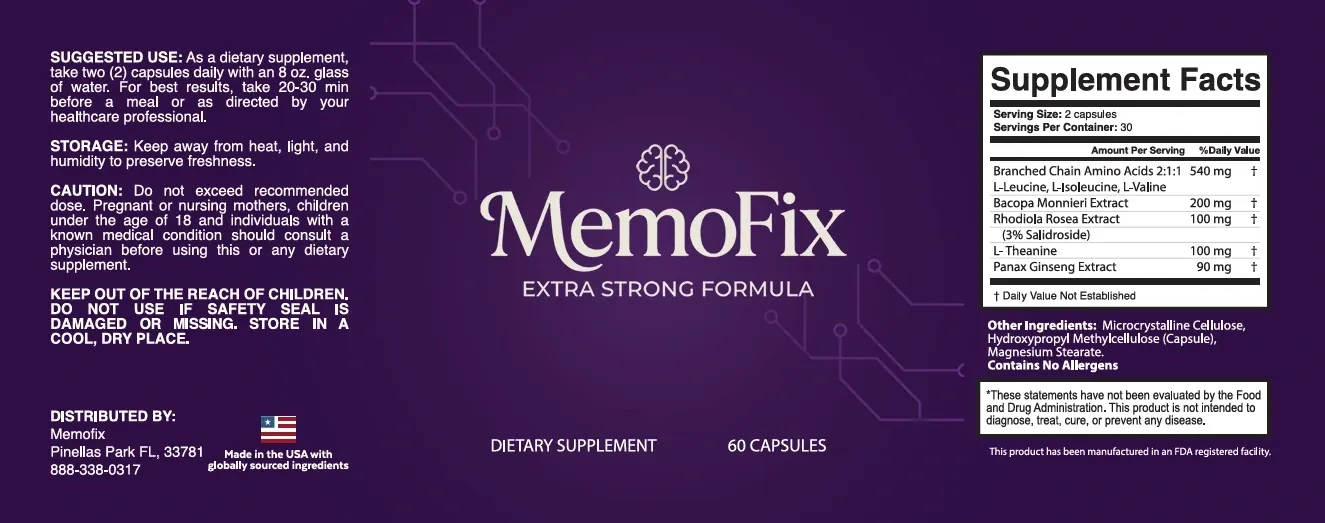
"Do not exceed recommended dose. Pregnant or nursing mothers, children under the age of 18 and individuals with a known medical condition should consult a physician before using this or any dietary supplement."
So pregnant or nursing women, anyone under 18 and anyone with a known medical condition should talk to a physician before the first capsule. This site sells Memofix only to adults.
On the bottle
What other safety instructions are on the Memofix label?
The label adds four plain rules beyond the caution. It says "DO NOT USE IF SAFETY SEAL IS DAMAGED OR MISSING." It also says "KEEP OUT OF THE REACH OF CHILDREN," "STORE IN A COOL, DRY PLACE" and "Do not exceed recommended dose."
- Check the seal under the cap before opening each new bottle.
- If the seal is torn or absent, do not open it. Call +1 (302) 200-3480 for a replacement or refund.
- Keep capsules in the original bottle, where the lot code is printed.
- The label lists "Contains No Allergens." Other ingredients: Microcrystalline Cellulose, Hydroxypropyl Methylcellulose (Capsule), Magnesium Stearate.
The Memofix directions page shows where to store the bottle and how to handle a missed day.
If something feels wrong
What should you do if you get side effects from Memofix?
Stop taking it
Do not push through symptoms to finish the bottle. Stopping is the fastest way to see if Memofix was the cause.
Write down what happened
Note the symptom, when it started, and anything else new, such as a medicine change.
Call your doctor or pharmacist
Bring the bottle so they can read the label. For severe symptoms, such as trouble breathing, get emergency care right away.
Report it if it was serious
Serious reactions to supplements can be reported to the FDA through its MedWatch program.
Call the order desk about a refund
Within 60 days of purchase, call +1 (302) 200-3480 with your order ID. Unused bottles go back to the returns address.
Sleep
Can Memofix keep you awake at night?
It might. Insomnia is listed for both rhodiola and Panax ginseng, and it is the most common side effect of ginseng (NCCIH, Rhodiola) (NCCIH, Asian ginseng). Memofix contains 100 mg of rhodiola and 90 mg of ginseng per serving.
Pairing the capsules with breakfast or lunch, rather than dinner, keeps them further from bedtime. That still follows the label's 20-30 minute pre-meal timing. If sleep stays poor, stop and talk to your doctor.
The who Memofix is for page has a six-question check to run before you order.
FAQ
Memofix side effects FAQ
Is Memofix safe?
Its ingredients have mostly mild reported side effects at research doses, and Memofix uses similar or lower amounts. No trial of Memofix itself has tested its safety, and some medicines interact with its herbs.
Can I take Memofix with warfarin?
Ask your prescriber first. Ginseng reduced warfarin's effect in one case, and later studies are mixed.
Can Memofix lower blood sugar?
Panax ginseng may lower blood sugar. If you take diabetes medicine, talk to your doctor before starting.
Can I take Memofix while pregnant or breastfeeding?
The label says pregnant or nursing mothers should consult a physician first. Asian ginseng may be unsafe in pregnancy.
Does Memofix contain caffeine?
No caffeine is listed on the label. L-theanine is an amino acid found in tea, not a stimulant.
What if my bottle has no safety seal?
Do not use it. Call the order desk at +1 (302) 200-3480 with your order ID.
Is it safe to take more than 2 capsules?
No. Two capsules a day is the most the label allows, and it warns against going over that.
Keep reading
More about Memofix
Who it's for
Who Memofix may suit, who should check with a doctor first, and who is better served by something else.
Read more
How to use
The label directions word for word, a simple pre-meal routine, storage tips and the medicine check to do first.
Read moreGinseng and your medicines
What Asian ginseng research shows, which medicines it may interact with, and questions to ask your pharmacist.
Read moreUSA Authorized Memofix Retailer
Ready to try Memofix with the 60-day guarantee?
Order through the authorized retailer's page so your order ID is on file with the refund desk. Two capsules a day; the 2-bottle pack covers the whole 60-day window.
Questions before you buy? Call +1 (302) 200-3480. 60-day money-back guarantee, return shipping paid by the buyer.