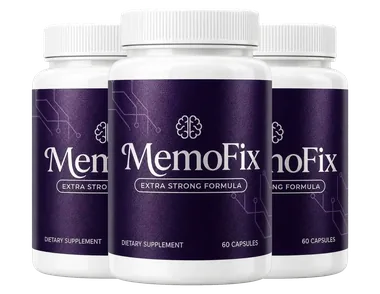
The idea
How Does Memofix Work? Each Ingredient's Job
Memofix combines ingredients that were each studied for a different job, with the idea that small effects add up.
Bacopa is there for memory and attention over weeks, rhodiola for fatigue, L-theanine for stress, ginseng for thinking and BCAAs for muscle.
See the dose of each ingredient.
In short
How is Memofix supposed to work?
Memofix is built on a stacking idea: take several herbs and amino acids with separate research, and hope the modest effects add together.
None of the five ingredients works like a drug with one clear target. Each one has proposed actions from lab and animal work, plus a handful of human trials. Some of those trials found small gains. Others found nothing.
The key gap is simple. Nobody has tested this exact mix. So everything below describes single ingredients, not Memofix as a product.
The formula logic
Why does Memofix combine five ingredients?
The brand does not explain its choices, but the mix points to three goals at once. Bacopa targets recall, rhodiola and L-theanine target stress and tiredness, and ginseng targets energy.
More than one angle
A tired, stressed person may focus worse than a rested one. Easing stress could help attention indirectly.
Less room per ingredient
Two capsules hold about 1,030 mg. Splitting that space five ways keeps each herb near the low end of its studied range.
Do they add up?
Combining small effects sounds logical. It has never been measured for this formula.
A single-herb bacopa product can reach 300 mg or more in one capsule. Memofix trades that depth for breadth. Whether that is the better bet depends on what you want from it, which the ingredients page can help you judge.
Brand graphic
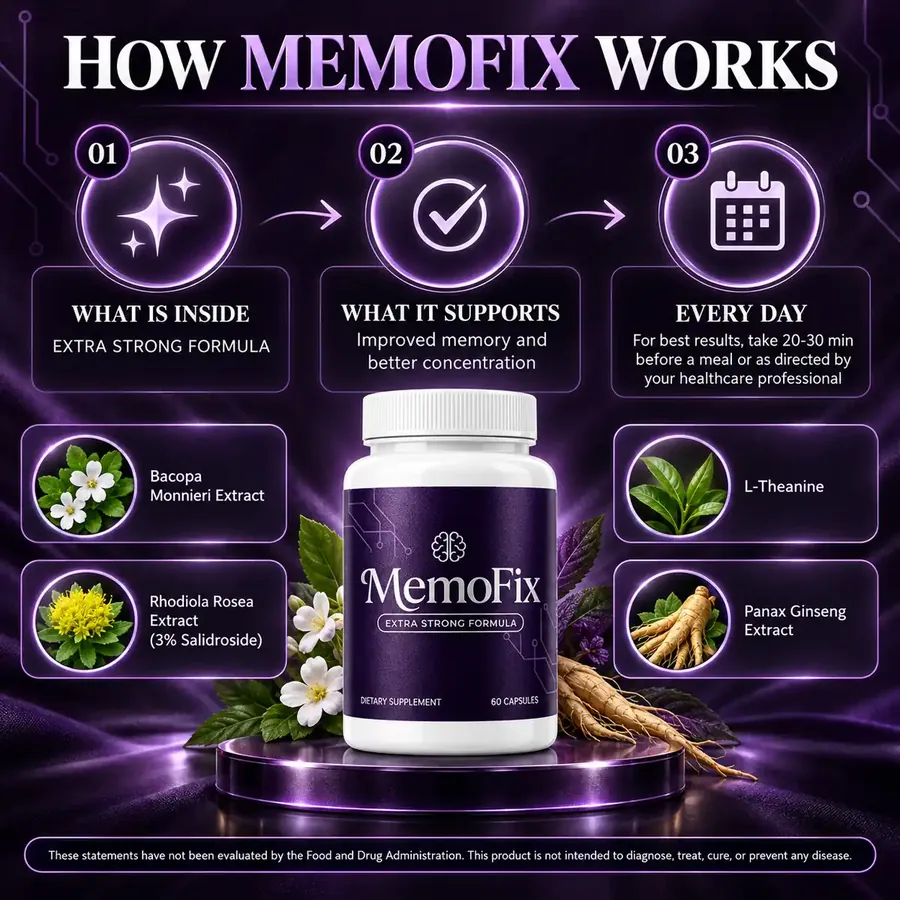
What does the "How Memofix Works" graphic show?
The brand's graphic breaks the product into three numbered panels and four ingredient tiles.
01 What is inside
The panel reads "Extra Strong Formula." That is the product's name, not a measured potency.
02 What it supports
"Improved memory and better concentration," in the brand's words. It is a marketing claim with no Memofix trial behind it.
03 Every day
"Take 20-30 min before a meal," which matches the label directions.
Bacopa
What is bacopa thought to do in Memofix?
Bacopa is the ingredient meant to carry the memory side of Memofix. Its active compounds, called bacosides, are thought to support the way nerve cells signal and to act as antioxidants.
In plain words, bacopa is a slow herb. Trials that found benefits gave it every day for 12 weeks. The gains were small: better scores on some word-recall tests (Pase et al., 2012) and slightly quicker attention tasks (Kongkeaw et al., 2014).
- Known: small, slow effects in healthy adults at 300-450 mg
- Not known: whether 200 mg of this extract does the same
- Not known: whether it helps anyone with a memory disorder (LiverTox, Bacopa)
Rhodiola
What is rhodiola thought to do in Memofix?
Rhodiola is there for mental fatigue. It is often called an adaptogen, a loose term for plants said to help the body cope with stress. That word has no medical definition.
Blunting the stress response
Salidroside and related compounds are thought to affect how the body reacts to strain.
Contradictory results
Some fatigue trials were positive, others were not, and many had a high risk of bias (Ishaque et al., 2012).
Unproven for any use
A federal review found too little reliable evidence to call it useful (NCCIH, Rhodiola).
If rhodiola helps anyone, the likely effect is feeling less worn out during stress, not a sharper memory.
L-theanine
What is L-theanine thought to do in Memofix?
L-theanine is the calming piece. It reaches the brain and is thought to nudge the balance of calming and alerting signals, which may be why tea feels gentler than coffee.
The best-known trial gave 200 mg a day for four weeks and saw lower stress scores and better results on some thinking tests (Hidese et al., 2019). Memofix gives half that. A calmer mind can make focus easier, but that is an indirect path, and it was not measured here.
Both target stress rather than memory. Together they suggest the brand is aiming at a clearer, less frazzled day more than at recall itself.
Ginseng
What is Panax ginseng thought to do in Memofix?
Ginseng is the energy and thinking piece. Its ginsenosides have many proposed actions in lab studies, from blood sugar to blood flow.
In people, the picture is weak. A Cochrane review found no convincing cognitive benefit in healthy adults (Geng et al., 2010 (Cochrane)). NCCIH notes a possible effect in middle-aged adults only (NCCIH, Asian ginseng). Because ginseng can lower blood sugar, it is the ingredient most likely to matter if you take diabetes medicine (NCCIH, Herb-drug interactions).
BCAAs
What are BCAAs thought to do in Memofix?
BCAAs are building blocks of protein. Leucine, the largest share, helps signal muscle to build new tissue after exercise.
A common theory says BCAAs compete with other amino acids for entry into the brain, which might lessen tiredness during long exercise. Results for performance are inconsistent even at 10 to 14 g a day (ODS, Exercise supplements). At 540 mg, Memofix gives far less than the studied amount, and no memory benefit has been shown for BCAAs at any dose.
The brand does not say why BCAAs lead the label. Whatever the reason, they are the part of Memofix with the weakest link to its memory message. They also take up more capsule space than all three herbs combined.
Evidence map
What is known and not known about how Memofix works?
The table sums up each ingredient in one row. The last column is the one that matters most for a buyer.
| Ingredient | Proposed role | Best human finding | Still unknown |
|---|---|---|---|
| Bacopa 200 mg | Recall and attention | Small gains after 12 weeks at 300-450 mg (Pase et al., 2012) | Effect at 200 mg of an unstated extract |
| Rhodiola 100 mg | Mental fatigue | Mixed trials, none replicated (Hung et al., 2011) | Whether it works at all |
| L-theanine 100 mg | Stress and calm | Lower stress at 200 mg for 4 weeks (Hidese et al., 2019) | Effect at half that dose |
| Ginseng 90 mg | Energy and thinking | No convincing effect in healthy people (Geng et al., 2010 (Cochrane)) | Any benefit for younger adults |
| BCAAs 540 mg | Muscle, fatigue | Inconsistent even at 10-14 g (ODS, Exercise supplements) | Any role in memory |
| The full mix | Combined support | No trial published | How the five interact |
Timing
How long would Memofix take to work, if it works?
Nobody can say for Memofix, because no trial measured it. The ingredient studies hint at two speeds.
- Days 1 to 30
The trials cited here did not measure quick effects. Any early change would be subtle and hard to separate from better sleep or a calmer week.
- Weeks 4 to 8
The L-theanine trial ran four weeks. This is also when the 60-day refund window closes.
- Week 12
Bacopa trials measured recall at 12 weeks. That is longer than the guarantee.
The label's pre-meal timing is not explained on the bottle. Our how-to-use guide covers the routine, and the results timeline goes week by week.
Limits
What Memofix cannot do
Memofix is a dietary supplement, so it cannot diagnose, treat or prevent any memory disease. Its claims have not been evaluated by the FDA (FDA, Supplement Q&A).
Forgetfulness that disrupts work or home life has many treatable causes, from medicines to thyroid problems and low vitamin B12 (NIA, Memory problems). See a doctor first.
For the claims the seller makes and how they hold up, read Memofix benefits. For side effects, see Memofix safety.
FAQ
How Memofix works: FAQ
Is Memofix a stimulant?
No. It lists no caffeine. Ginseng is sometimes linked to energy, and rhodiola to fatigue, but neither is a stimulant drug.
Which Memofix ingredient is meant for memory?
Bacopa. It has the most memory research, with small gains after 12 weeks at 300-450 mg (Pase et al., 2012).
Does Memofix work right away?
No study says so. The bacopa research measured results after 12 weeks.
What does "adaptogen" mean?
It is a loose term for herbs said to help the body handle stress. It is not a medical category.
Why take Memofix before a meal?
The label says 20-30 minutes before a meal but does not explain why. Following the label keeps your routine consistent.
Has Memofix been studied as a product?
No. No trial of the combined formula has been published.
Keep reading
More about Memofix
Ingredients
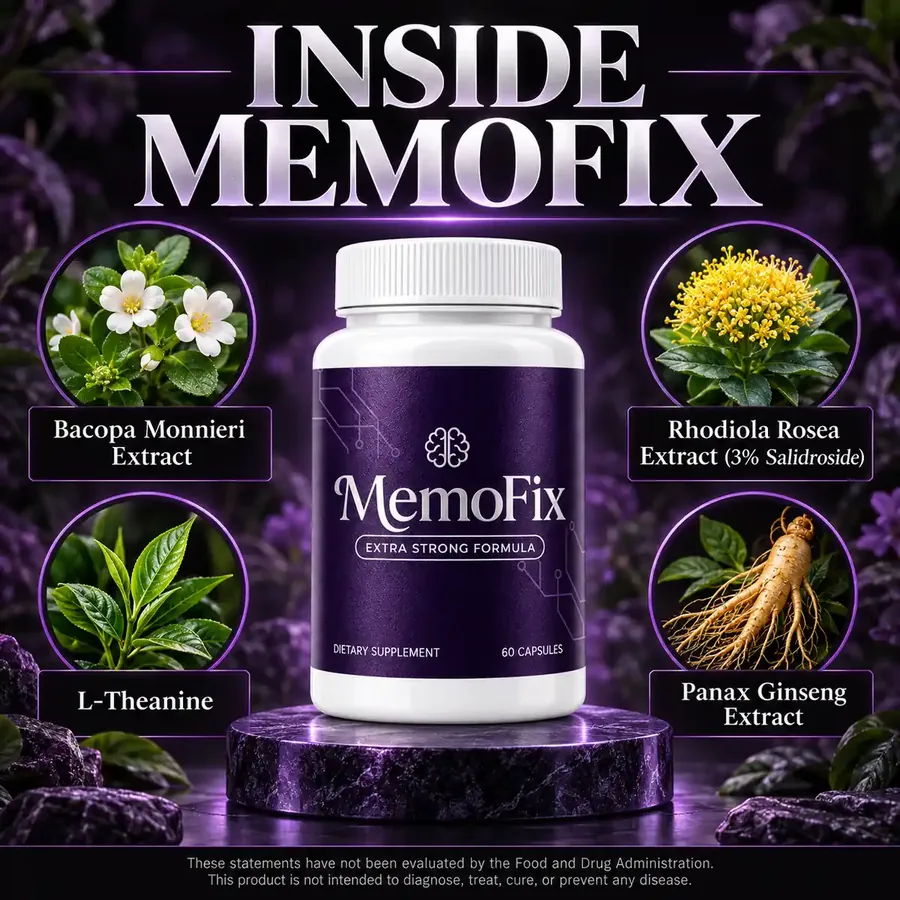
Each Memofix ingredient with its amount per serving, what studies used and what those studies measured.
Read more
Results timeline
No product trial, 12-week bacopa studies and a 60-day refund window: how to plan and track an honest trial.
Read moreHow to use
The label directions word for word, a simple pre-meal routine, storage tips and the medicine check to do first.
Read moreUSA Authorized Memofix Retailer
Ready to try Memofix with the 60-day guarantee?
Order through the authorized retailer's page so your order ID is on file with the refund desk. Two capsules a day; the 2-bottle pack covers the whole 60-day window.
Questions before you buy? Call +1 (302) 200-3480. 60-day money-back guarantee, return shipping paid by the buyer.