Guide
Brain Health Guide: Normal Forgetting, Proven Habits and Where Memofix Fits
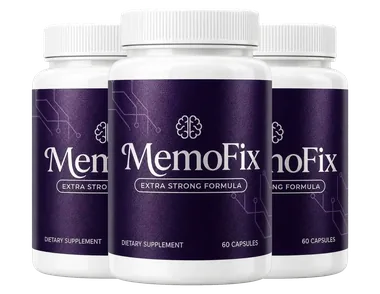
Mild forgetfulness is common with age, but getting lost or repeating questions needs a doctor (NIA, Memory problems). Staying active, controlling blood pressure, treating hearing loss, not smoking and seeing people have the best support (CDC, Dementia risk). No supplement is recommended to prevent decline (NIA, Cognitive health). Memofix fits, at most, as an extra on top of those habits.
Memory basics
What is normal forgetfulness as you get older?
Mild forgetfulness is a common part of aging. Losing your keys now and then, or needing a moment to find a word, is usually normal (NIA, Memory problems).
Healthy brains slow down a little with age. New facts may take longer to learn, and names may take longer to recall. The memory is still there, and it usually comes back with a cue.
Stress, a busy week and a short night can all make slips more frequent. Those slips often fade once life calms down. What matters most is whether the changes grow over time or start to get in the way of daily life.
Warning signs
Which memory changes are warning signs, not normal aging?
Warning signs are changes that disrupt daily life. The National Institute on Aging lists asking the same question over and over and getting lost in familiar places among them (NIA, Memory problems).
| Usually normal | Worth a doctor visit |
|---|---|
| Forgetting where you put your glasses | Getting lost on a route you have driven for years |
| Missing a monthly bill once | Trouble handling money or bills at all |
| Forgetting a name, then recalling it later | Asking the same question again and again |
| Needing a moment to find the right word | Trouble following a recipe or simple steps you know well |
| Losing track of the date, then working it out | Confusion about time, people or places that keeps coming back |
If a friend or family member notices changes first, take that seriously. People with memory problems often miss the signs themselves.
Treatable causes
Which treatable causes can make memory worse?
Many memory problems have a cause a doctor can find and fix.
Several common, treatable problems can cause memory trouble. The NIA names medicine side effects, thyroid problems, depression, poor sleep and a lack of vitamin B12 (NIA, Memory problems).
Medicines
Some sleep aids, allergy pills and pain medicines can dull memory. A pharmacist can review your list.
Thyroid problems
An underactive thyroid can slow thinking. A simple blood test can find it.
Depression
Low mood can look like memory loss. It often improves with treatment.
Poor sleep
Short or broken sleep makes new memories harder to form. Snoring and pauses in breathing are worth a mention.
Low vitamin B12
Low B12 is more common in older adults and some diets. A blood test can show it.
For the visit
A list of every medicine and supplement, and notes on when the changes started.
What helps
Which habits have the best evidence for brain health?
The habits with the strongest support are everyday ones. The CDC estimates that nearly 45% of dementia cases may be prevented or delayed by addressing risk factors like these (CDC, Dementia risk).
| Habit | What the agencies say | A simple way to start |
|---|---|---|
| Physical activity | Aim for 150 minutes a week (CDC, Dementia risk) | A brisk 20-minute walk most days |
| Blood pressure | Managing it is linked to lower risk of decline (NIA, Cognitive health) | Know your numbers and take pressure medicine as prescribed |
| Hearing | Treating hearing loss is on the CDC list (CDC, Dementia risk) | Get a hearing test and use aids if advised |
| Not smoking | Avoiding smoking lowers risk (CDC, Dementia risk) | Ask your doctor about quit aids |
| Social contact | Staying connected supports thinking (NIA, Cognitive health) | A weekly call, class or club |
| Blood sugar and alcohol | Manage diabetes and limit drinking (CDC, Dementia risk) | Keep checkups and set alcohol-free days |
None of these habits is fast. Their value builds over years, and they also help the heart.
Key numbers
What do the key brain health numbers say?
Get started
How can you start brain-healthy habits this week?
Start with one small change a day for a week. Small steps are easier to keep than a big plan.
Day 1: Walk
Take a 20-minute walk. Put the next one on your calendar.
Day 2: Check your pressure
Use a pharmacy cuff or a home monitor. Write the number down.
Day 3: List your medicines
Include every pill, cream and supplement. Take the list to your next visit.
Day 4: Call someone
Reach out to a friend or relative you have not talked to in a while.
Day 5: Protect your sleep
Set a fixed bedtime and put screens away 30 minutes before it.
Day 6: Book a hearing test
Many clinics and some pharmacies offer one. It takes little time.
Supplement research
What does research show about supplements for memory?
Research has not shown that popular brain supplements prevent or slow cognitive decline. NCCIH reviewed ginkgo, omega-3s, vitamin E and B vitamins and found no conclusive evidence (NCCIH, Supplements and cognition).
The National Institute on Aging agrees. It does not recommend any vitamin or supplement to prevent Alzheimer's or cognitive decline (NIA, Cognitive health).
Single herbs have a few small positive trials. Bacopa is the best example. Six trials of 300-450 mg a day for 12 weeks improved 9 of 17 free-recall tests, but the authors called the research young (Pase et al., 2012). Ginseng is weaker: a Cochrane review found no convincing effect on thinking in healthy people (Geng et al., 2010 (Cochrane)).
Most herb trials measured small changes in reaction time or word recall. They were not about disease, and they did not test full products like Memofix.
Where Memofix fits
Where does Memofix fit in a brain health plan?
Memofix fits, at most, as an extra on top of the habits above. It cannot stand in for exercise, blood pressure care or a doctor visit.
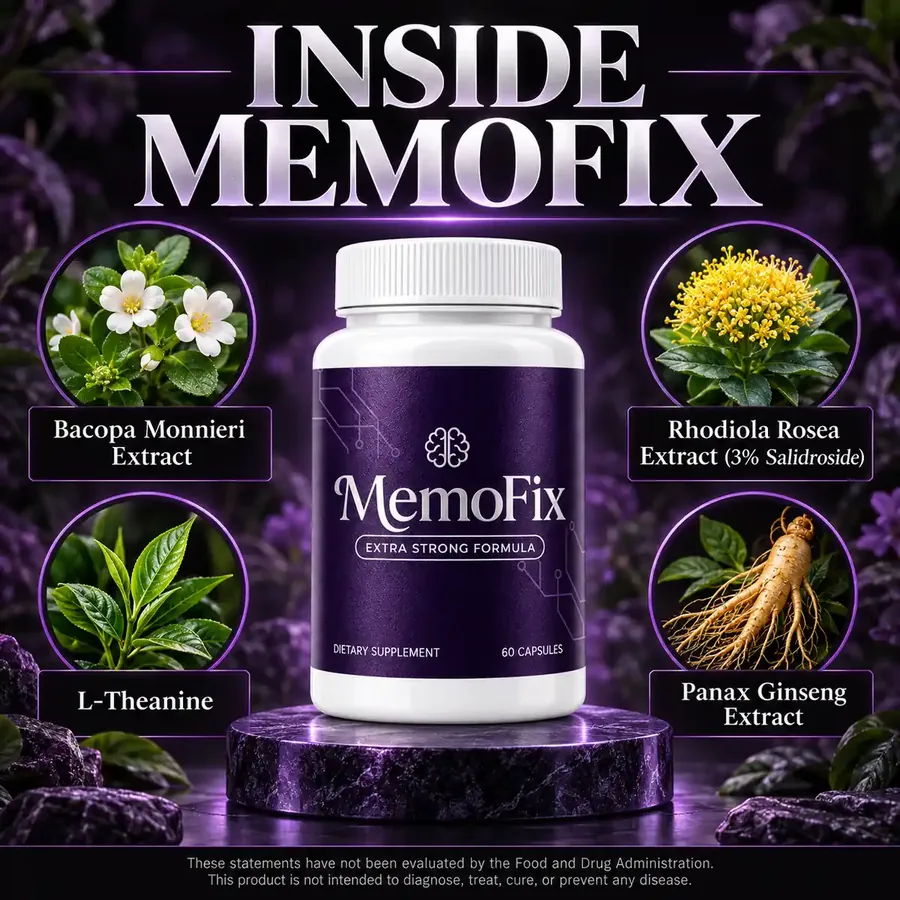
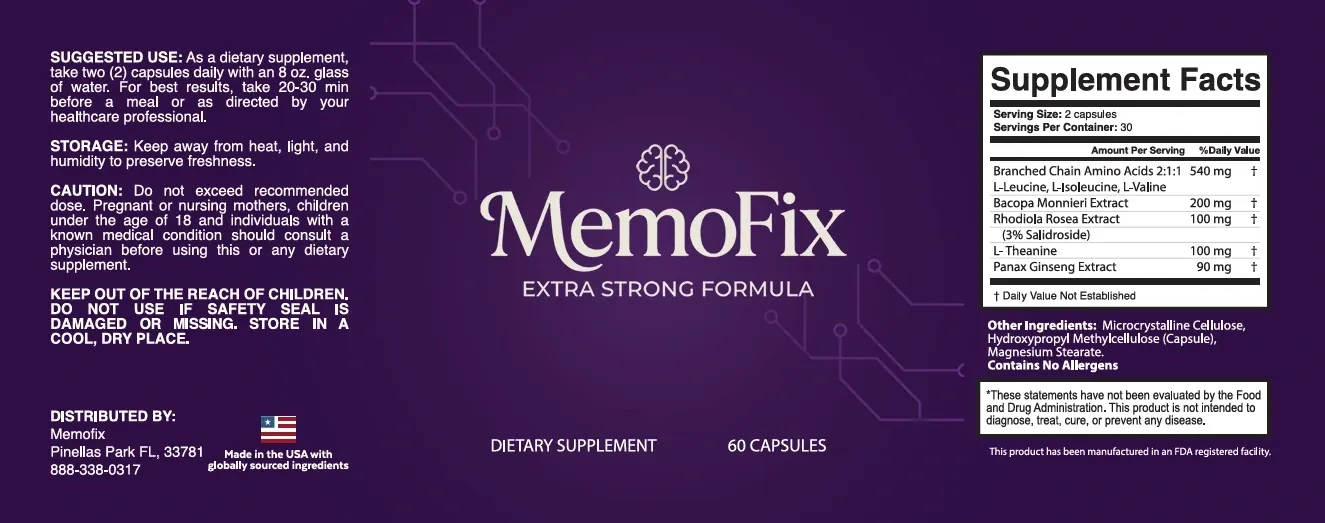
Its label is more open than many. The full panel lists bacopa 200 mg, rhodiola 100 mg, L-theanine 100 mg, ginseng 90 mg and BCAAs 540 mg per 2 capsules. The Memofix ingredients page explains each one.
In its favor
- Every amount is printed on the panel.
- The herbs are studied ones, close to research doses.
- Rhodiola is standardized to 3% salidroside.
- A 60-day refund window lets you judge it at low risk.
Keep in mind
- No trial of Memofix itself exists.
- Bacopa is 200 mg, below the 300-450 mg in trials.
- BCAAs are the largest ingredient but have no memory research.
- Bacopa trials ran 12 weeks, longer than the refund window.
To judge it the way you would judge any product, use the nootropic supplement checklist.
Safety
When should you see a doctor instead of trying a supplement?
See a doctor first if memory changes affect work, driving, money or safety. A supplement can delay a diagnosis that has a real fix.
Memory problems that affect daily life need a doctor, not a supplement. Bring your medicine list and someone who knows you well.
Also talk to your doctor before starting Memofix if you take daily medicines. Ginseng may lower blood sugar, and it has mixed reports with warfarin (NCCIH, Asian ginseng) (NCCIH, Herb-drug interactions). The Memofix side effects page lists the details.
Sources
Which sources does the brain health guide use?
Every claim in the guide links to one of these sources. Most are U.S. government health agencies.
- The cognitive-enhancing effects of Bacopa monnieri: a systematic review of randomized, controlled human clinical trials. Pase MP, et al. Journal of Alternative and Complementary Medicine, 2012.6 trials, all 12 weeks, 300-450 mg of extract a day: better on 9 of 17 free-recall tests; research is in its infancy.
- Asian Ginseng: Usefulness and Safety. National Center for Complementary and Integrative Health, 2025.May help thinking in middle-aged adults but not young adults; memory gains seemed to depend on added ginkgo. Insomnia is the most common side effect; may lower blood sugar; may be unsafe in pregnancy.
- Ginseng for cognition. Geng J, et al. Cochrane Database of Systematic Reviews, 2010.9 trials: no convincing evidence of a cognitive-enhancing effect of Panax ginseng in healthy people and no high-quality evidence in dementia.
- Herb-Drug Interactions. National Center for Complementary and Integrative Health, 2024.Studies of Asian ginseng with warfarin are mixed; possible interactions with some blood pressure drugs, statins and antidepressants.
- Dietary Supplements and Cognitive Function, Dementia, and Alzheimer's Disease. National Center for Complementary and Integrative Health, 2022.No conclusive evidence that popular brain supplements such as ginkgo, omega-3s, vitamin E or B vitamins prevent or slow cognitive decline.
- Cognitive Health and Older Adults. National Institute on Aging, 2024.No vitamin or supplement is recommended for preventing Alzheimer's or cognitive decline. Physical activity, blood pressure control and social contact help.
- Memory Problems, Forgetfulness, and Aging. National Institute on Aging, 2023.Mild forgetfulness is common; repeating questions or getting lost are warning signs. Medicines, thyroid problems, depression, poor sleep and low B12 can cause memory problems.
- Reducing Risk for Dementia. Centers for Disease Control and Prevention, 2024.Nearly 45% of dementia cases may be prevented or delayed: be active 150 minutes a week, manage blood pressure and diabetes, treat hearing loss, avoid smoking and limit alcohol.
FAQ
Brain health guide FAQ
Is it normal to forget names as I get older?
Yes, it is common. Forgetting a name and recalling it later is usually normal aging, not a warning sign.
What memory changes mean I should see a doctor?
Getting lost in familiar places, repeating the same questions, or trouble with bills and daily tasks. These need a checkup.
Can a supplement stop memory decline?
No supplement has been shown to do that. The National Institute on Aging does not recommend any vitamin or supplement for prevention.
What is the single best habit for brain health?
There is no single one, but regular activity is a strong start. The CDC suggests 150 minutes a week.
Can Memofix replace lifestyle changes?
No. Memofix is at most an extra on top of activity, blood pressure care, good sleep and social contact.
How long do herb trials for memory last?
The main bacopa trials lasted 12 weeks. Short-term use is less studied.
Keep reading
More about Memofix
Choosing a supplement
Six checks for any memory or focus supplement, with an honest Memofix scorecard.
Read moreIngredients
Each Memofix ingredient with its amount per serving, what studies used and what those studies measured.
Read moreSide effects
Side effects reported for each Memofix ingredient, the medicine interactions to check, and the label cautions in full.
Read moreUSA Authorized Memofix Retailer
Ready to try Memofix with the 60-day guarantee?
Order through the authorized retailer's page so your order ID is on file with the refund desk. Two capsules a day; the 2-bottle pack covers the whole 60-day window.
Questions before you buy? Call +1 (302) 200-3480. 60-day money-back guarantee, return shipping paid by the buyer.