Blog
Can MemoFix Help With Alzheimer's or Dementia? What the Label, Research and Doctors Say
No. MemoFix is a dietary supplement. It is not intended to diagnose, treat, cure, or prevent any disease, and that includes Alzheimer's and dementia. No trial of MemoFix exists. Memory changes that disrupt daily life need a doctor, who can look for causes that may be treatable.

At a glance
Key facts
- The label says MemoFix is not intended to diagnose, treat, cure, or prevent any disease.
- Alzheimer's and dementia are not named in the label or the benefit lines on the sales page.
- No trial of MemoFix has been published, for any condition.
- Bacopa trials looked at memory in adults over 12 weeks. They did not test treatment of a disease.
- Memory trouble that affects daily life needs a doctor's visit.
- The label caution applies: ask a physician first if you have a known medical condition.
- Any page that says MemoFix treats dementia is making a claim the seller does not make.
The direct answer
Is MemoFix a treatment for Alzheimer's or dementia?
No. It is a capsule sold as a dietary supplement, and the law around supplements does not allow it to be sold as a treatment.
The standard statement is printed on the label: not intended to diagnose, treat, cure, or prevent any disease. That line covers every upbeat phrase on the sales page, and it covers the two diseases in the title.
The sales page benefit lines are about everyday topics: memory, concentration, mental clarity and cognitive well-being. None of them names a disease. If you see a page that does, it has gone beyond what the seller says.
The worry behind the search
Why do people search for MemoFix with Alzheimer's and dementia?
Memory loss in a parent or partner is frightening, and people reach for any tool that might help. Search tools then fill in suggestions that join a product name with a disease name.
A suggestion is not a finding. It shows what people type, not what is true. For MemoFix, nothing we hold links the capsule to either disease.
If you are looking on behalf of someone else, the kindest step is usually a doctor's appointment, with the bottle and a list of everything the person takes.
What was studied
What does research on the ingredients cover?
The studies we cite looked at healthy adults or people with everyday complaints, and at single ingredients. They were not trials of a treatment for dementia.
| Ingredient | What the cited research looked at |
|---|---|
| Bacopa | Memory and attention in adults; 12-week trials at 300-450 mg a day (Kongkeaw et al., 2014) |
| L-theanine | Stress and thinking scores in healthy adults (Hidese et al., 2019) |
| Rhodiola | Physical and mental fatigue (Ishaque et al., 2012) |
| Panax ginseng | Thinking in healthy people; no convincing effect (Geng et al., 2010 (Cochrane)) |
| BCAAs | Muscle and exercise (ODS, Exercise supplements) |
NCCIH also keeps a digest on supplements, cognitive function and dementia, which is the better place for a full summary (NCCIH, Supplements and cognition).
Normal versus not
Is forgetfulness always a sign of dementia?
No. Some forgetfulness comes with ageing, and the NIA describes how it differs from signs that need attention (NIA, Memory problems).
Often part of ordinary ageing
- Losing keys now and then
- Forgetting a name and recalling it later
- Needing a reminder for an appointment
Worth raising with a doctor
- Asking the same question again and again
- Getting lost in a familiar place
- Trouble following steps or handling bills
- Confusion about time or people
Medicines, thyroid problems, low mood, poor sleep and low vitamin B12 can all affect memory, and many of these are treatable (NIA, Memory problems). Only a doctor can tell which applies.
Habits with a track record
What do health agencies say can support brain health?
Public health sources point to habits rather than capsules. The NIA lists steps such as staying active, eating well, sleeping well and keeping in touch with others (NIA, Cognitive health).
The CDC lists ways to lower the risk of dementia, including physical activity and care of blood pressure (CDC, Dementia risk). These steps are a better first move than any supplement.
If you add MemoFix, treat it as an extra and keep those habits steady. Do not swap it in for care, a diagnosis or a medicine your doctor has prescribed.
Before the visit
What should you bring to a doctor about memory changes?
A little preparation makes the visit more useful.
A medicine list
Include prescriptions, over-the-counter items and every supplement, with doses.
The MemoFix bottle
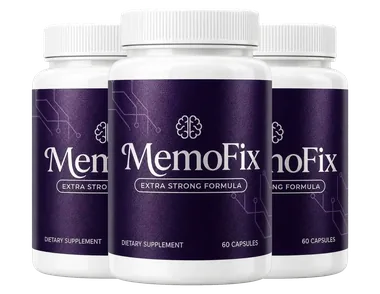
The label lists all five ingredients and amounts, so the pharmacist can check for interactions.
A short timeline
Write down when changes began and what a typical day looks like.
A second voice
If you can, bring a relative who has noticed the changes.
Your questions
Ask which causes are possible and which tests make sense.
Ask your doctor or pharmacist first if you take blood thinners, diabetes, blood pressure or mood medicines. Pregnant or nursing women, anyone under 18 and anyone with a known medical condition should talk to a physician before use. Ginseng may lower blood sugar, and rhodiola was reported to interact with losartan.
Where the facts come from
Which sources does this article use?
The bottle label, the seller brief and this site's own policy pages supply the product facts. The public sources below back the health and rules points. A fact none of them states appears here as "not published."
- NIA, Memory problemsMemory Problems, Forgetfulness, and Aging. National Institute on Aging, 2023.
- NIA, Cognitive healthCognitive Health and Older Adults. National Institute on Aging, 2024.
- CDC, Dementia riskReducing Risk for Dementia. Centers for Disease Control and Prevention, 2024.
- NCCIH, Supplements and cognitionDietary Supplements and Cognitive Function, Dementia, and Alzheimer's Disease. National Center for Complementary and Integrative Health, 2022.
- Kongkeaw et al., 2014Meta-analysis of randomized controlled trials on cognitive effects of Bacopa monnieri extract. Kongkeaw C, et al. Journal of Ethnopharmacology, 2014.
- Hidese et al., 2019Effects of L-Theanine Administration on Stress-Related Symptoms and Cognitive Functions in Healthy Adults: A Randomized Controlled Trial. Hidese S, et al. Nutrients, 2019.
- Ishaque et al., 2012Rhodiola rosea for physical and mental fatigue: a systematic review. Ishaque S, et al. BMC Complementary and Alternative Medicine, 2012.
- Geng et al., 2010 (Cochrane)Ginseng for cognition. Geng J, et al. Cochrane Database of Systematic Reviews, 2010.
- ODS, Exercise supplementsDietary Supplements for Exercise and Athletic Performance: Fact Sheet for Health Professionals. NIH Office of Dietary Supplements, 2026.
- NCCIH, Herb-drug interactionsHerb-Drug Interactions. National Center for Complementary and Integrative Health, 2024.
FAQ
Frequently asked questions
Can MemoFix treat Alzheimer's disease?
No. The label says MemoFix is not intended to diagnose, treat, cure, or prevent any disease. No trial of MemoFix exists.
Can MemoFix prevent dementia?
No claim of prevention is made. The CDC and NIA list habits with a track record, such as activity and sleep.
Is MemoFix a medicine for memory loss?
No. It is a dietary supplement and is not FDA approved. Memory loss that affects daily life needs a doctor.
Why do some sites link MemoFix to dementia?
Search suggestions join product names with worries. We hold no source that links MemoFix to either disease.
Should my parent take MemoFix?
Ask their doctor or pharmacist first, especially if they take blood thinners, diabetes, blood pressure or mood medicines.
What should I do if memory is getting worse?
Book a doctor's visit. Medicines, thyroid problems, poor sleep and low B12 can all play a part, and some are treatable.
Bottom line
Our view
A supplement cannot answer a question about a disease, and we would be doing you harm if we hinted that it could. The label is clear, and so are we.
If you are worried about your own memory or a loved one's, the next step is a conversation with a doctor. Bring the full list of what is being taken, MemoFix included.
If your doctor is happy for you to try it as an extra, the 60-day money-back window lets you test it at a limited risk. The goal is to keep the care that matters at the center.
MemoFix is a dietary supplement, not a drug. It is not FDA approved, and no supplement is. These statements have not been evaluated by the Food and Drug Administration. This product is not intended to diagnose, treat, cure, or prevent any disease.
USA Authorized Memofix Retailer
If your doctor agrees, the order page shows the totals and refund terms before you pay.
We earn money when you buy through our order links. The price is set at checkout.
Last updated