Blog
Rhodiola and L-Theanine for Stress and Focus: What the Studies Show
The evidence is thin for rhodiola and a little stronger for L-theanine. Rhodiola trials used 100-576 mg a day for mental fatigue, with mixed results and no independent repeats (Ishaque et al., 2012) (Hung et al., 2011). L-theanine at 200 mg a day lowered stress scores in a 4-week trial of 30 adults (Hidese et al., 2019). Memofix lists 100 mg of each, the low end for rhodiola and half the L-theanine trial dose.
The basics
How do stress and focus affect each other?
Stress pulls attention away from the task in front of you. When your mind keeps returning to a worry, less of it is free for reading, planning or remembering a name.
Short bursts of stress are normal. A deadline can even sharpen you for an hour. Trouble starts when stress stays high for weeks and sleep slips. Then focus often feels worse, and small mistakes pile up.
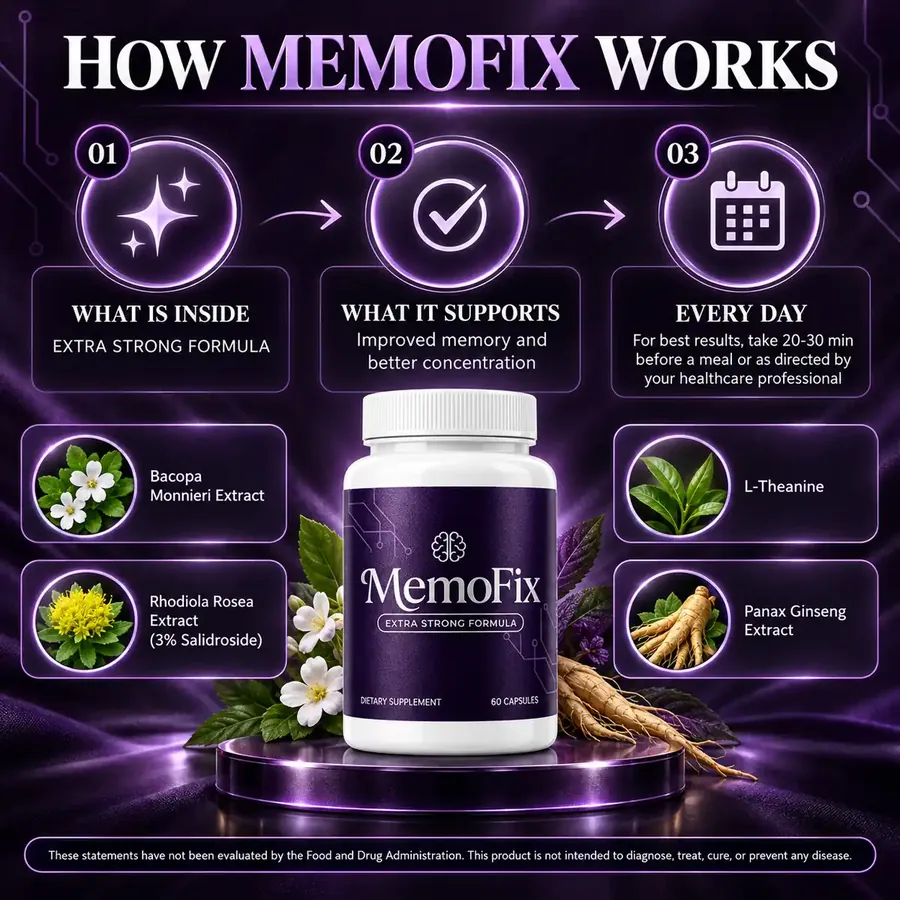
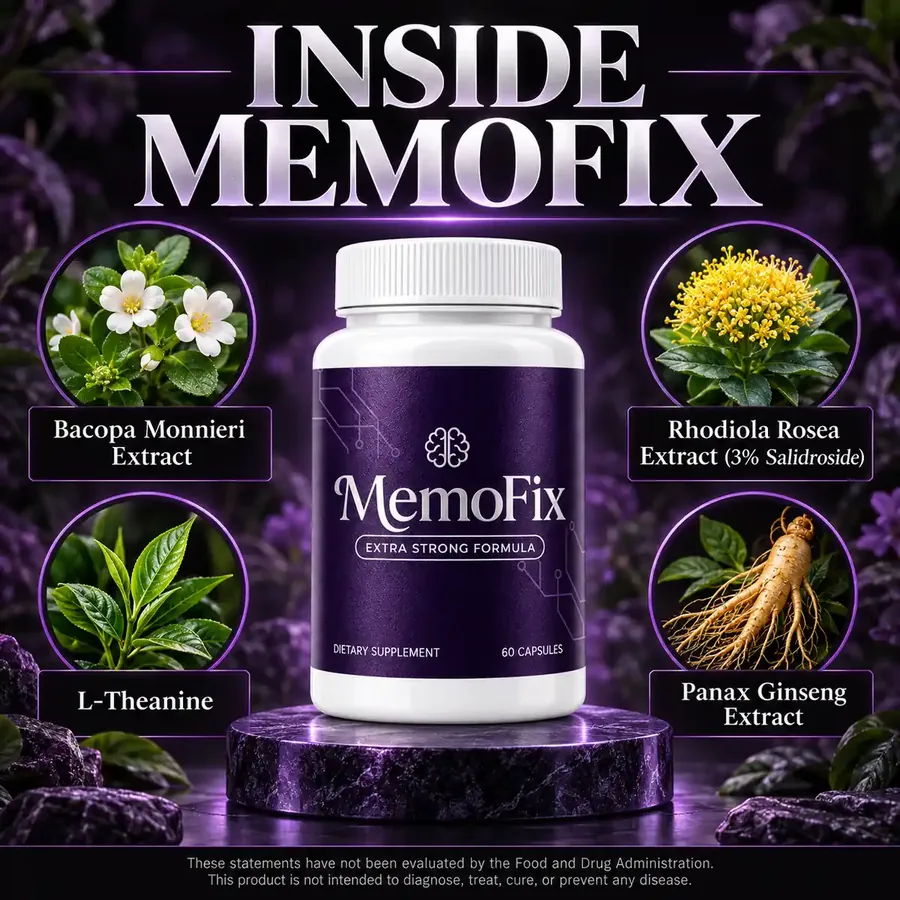
That link is why many brain supplements pair a "memory" herb with a "calm" ingredient. Memofix does this too. Next to bacopa, it lists rhodiola and L-theanine, 100 mg each per 2 capsules.
Both are sold for stress. They are very different, though. Rhodiola is a root extract with weak, mixed evidence. L-theanine is an amino acid from tea with a few small, cleaner trials.
Rhodiola
What is rhodiola?
Rhodiola rosea is a flowering plant that grows in cold, high places in Europe and Asia. Its root has long been used in folk medicine, often for tiredness. It is often called golden root or roseroot.
Supplements use a root extract. Many are standardized to salidroside, one of the plant's marker compounds. The Memofix label lists "Rhodiola Rosea Extract (3% Salidroside)," 100 mg per serving.
That 3% figure is useful. It is the only herb in Memofix with a stated strength. For bacopa and ginseng, the label gives the amount but not the level of active compounds. See all five lines on the ingredients page.
Rhodiola is often called an "adaptogen." That word is a marketing and folk term, not a medical category. It suggests the body copes better with stress, but it is not a proven effect.
The research
What does rhodiola research show for stress and fatigue?
It shows possible benefits, but the studies are weak and do not agree. Three sources, from 2011 to 2025, reach much the same view.
Ishaque review, 2012
Looked at 11 studies. Most had a high or unclear risk of bias. Mental-fatigue trials used 100 to 576 mg a day, and the results contradicted each other (Ishaque et al., 2012).
Hung review, 2011
Looked at 11 placebo-controlled trials. It saw possible gains in physical and mental performance, but no independent team had repeated the results (Hung et al., 2011).
NCCIH, 2025
The federal center says there is not enough reliable evidence to call rhodiola useful for any health purpose (NCCIH, Rhodiola).
Why does "no independent repeats" matter? A result is more trustworthy when a separate team gets the same answer. Without that, one hopeful trial can carry too much weight.
The fair summary: rhodiola is studied, not proven. Nobody can promise a stress effect at any dose.
Safety
Is rhodiola safe to take?
It is possibly safe for up to 12 weeks, according to NCCIH (NCCIH, Rhodiola). Safety past 12 weeks has not been well studied.
Reported side effects include dizziness, headache, trouble sleeping and dry mouth (NCCIH, Rhodiola). The 2012 review also found side effects were mild in the trials (Ishaque et al., 2012).
NCCIH notes a reported interaction between rhodiola and losartan, a blood pressure medicine (NCCIH, Rhodiola). If you take losartan or any blood pressure medicine, ask your doctor or pharmacist before you start Memofix.
Trouble sleeping is worth watching. If your sleep gets worse after you start, stop the capsules and tell your doctor. Our side effects page covers all five ingredients.
L-theanine
What is L-theanine, and what did trials find?
L-theanine is an amino acid found in tea leaves, especially green tea. Small trials link it to lower stress scores at 200 mg a day or more (Hidese et al., 2019) (Williams et al., 2020).
The best-known trial, from 2019, gave 30 healthy adults 200 mg a day for 4 weeks. Compared with placebo, they had lower stress-related scores. They also did better on some thinking tests, such as verbal fluency and executive function (Hidese et al., 2019).
A 2020 review pulled together 9 studies. It found that 200 to 400 mg a day may help reduce stress and anxiety. The authors asked for longer and larger trials (Williams et al., 2020).
- Trial dose: 200 mg a day, and up to 400 mg in the review
- Trial length: 4 weeks in the main trial
- Trial size: 30 adults, which is small
- No NIH fact sheet exists for L-theanine yet
So the signal is modest but steadier than rhodiola's. It still rests on small studies.
Side by side
How do rhodiola and L-theanine compare?
L-theanine has the clearer stress data, while rhodiola has the closer dose match in Memofix. The table lines up what each source found.
| Point | Rhodiola rosea | L-theanine |
|---|---|---|
| What it is | Root extract of a mountain plant | Amino acid found in tea |
| Research dose | 100 to 576 mg a day in mental-fatigue trials (Ishaque et al., 2012) | 200 mg a day; 200 to 400 mg in the review (Hidese et al., 2019) (Williams et al., 2020) |
| Main finding | Contradictory results; not repeated by independent teams (Ishaque et al., 2012) (Hung et al., 2011) | Lower stress scores and better scores on some thinking tests (Hidese et al., 2019) |
| Quality of evidence | Weak; high or unclear risk of bias | Small trials; longer, larger ones needed |
| Safety notes | Dizziness, headache, trouble sleeping, dry mouth; losartan interaction (NCCIH, Rhodiola) | No NIH fact sheet; safety data come from small trials |
| Memofix per 2 capsules | 100 mg, standardized to 3% salidroside | 100 mg |
| Share of lowest research dose | 100% | 50% |
A full dose match does not make an ingredient effective. It only means the amount reaches the range researchers tested.
By the numbers
Rhodiola and L-theanine in five numbers
Memofix
What do 100 mg of rhodiola and 100 mg of L-theanine in Memofix mean?
The rhodiola amount reaches the lowest trial dose, and the L-theanine amount is half of it. Neither figure tells you how Memofix itself performs, because no trial of the product exists.
In its favor
- Both amounts are printed, not hidden in a blend
- Rhodiola strength is stated: 3% salidroside
- Rhodiola meets the 100 mg low end of the trials
- L-theanine has small but steady trial data
Weak spots
- Rhodiola evidence is weak and mixed
- L-theanine is half the 200 mg trial dose
- No study has tested this mix
- Rhodiola may disturb sleep in some people
The sales page speaks of "Carefully selected natural herbs for mental clarity." That is the seller's wording. The studies above support a narrower view: two ingredients with some stress research, at modest amounts. The bacopa side of the formula is covered in what bacopa research shows.
Beyond capsules
What else helps with stress and focus?
Daily habits do more heavy lifting than any capsule. The National Institute on Aging points to physical activity, blood pressure control and social contact for long-term brain health (NIA, Cognitive health).
- Move most days, even a brisk walk after lunch.
- Keep a steady sleep and wake time.
- Work in short blocks with real breaks.
- Stay in touch with friends and family.
- Limit caffeine late in the day if sleep is poor.
Stress that does not lift, or worry that gets in the way of work and home, deserves a talk with a doctor. A supplement is not a treatment for anxiety. For more on habits and warning signs, read the brain health guide.
FAQ
Rhodiola and L-theanine FAQ
Does rhodiola help with stress?
It might, but the evidence is weak. Reviews found mixed results and no independent repeats, and NCCIH says there is not enough reliable evidence for any use (NCCIH, Rhodiola) (Ishaque et al., 2012) (Hung et al., 2011).
How much L-theanine is in Memofix?
The label lists 100 mg per 2 capsules. The main stress trial used 200 mg a day for 4 weeks (Hidese et al., 2019).
How much rhodiola is in Memofix?
The label lists 100 mg of rhodiola rosea extract standardized to 3% salidroside. That equals the lowest dose in the mental-fatigue trials (Ishaque et al., 2012).
Can rhodiola keep me awake?
Trouble sleeping is one of the reported side effects, along with dizziness, headache and dry mouth (NCCIH, Rhodiola).
Is L-theanine the same as caffeine?
No. L-theanine is an amino acid in tea, and it is not a stimulant. Memofix lists no caffeine on its label.
How long can you take rhodiola?
NCCIH calls rhodiola possibly safe for up to 12 weeks (NCCIH, Rhodiola). There is little safety data for longer use.
Keep reading
More about Memofix
What bacopa research shows
Two bacopa reviews, their 300-450 mg doses and 12-week timelines, and how 200 mg in Memofix compares.
Read more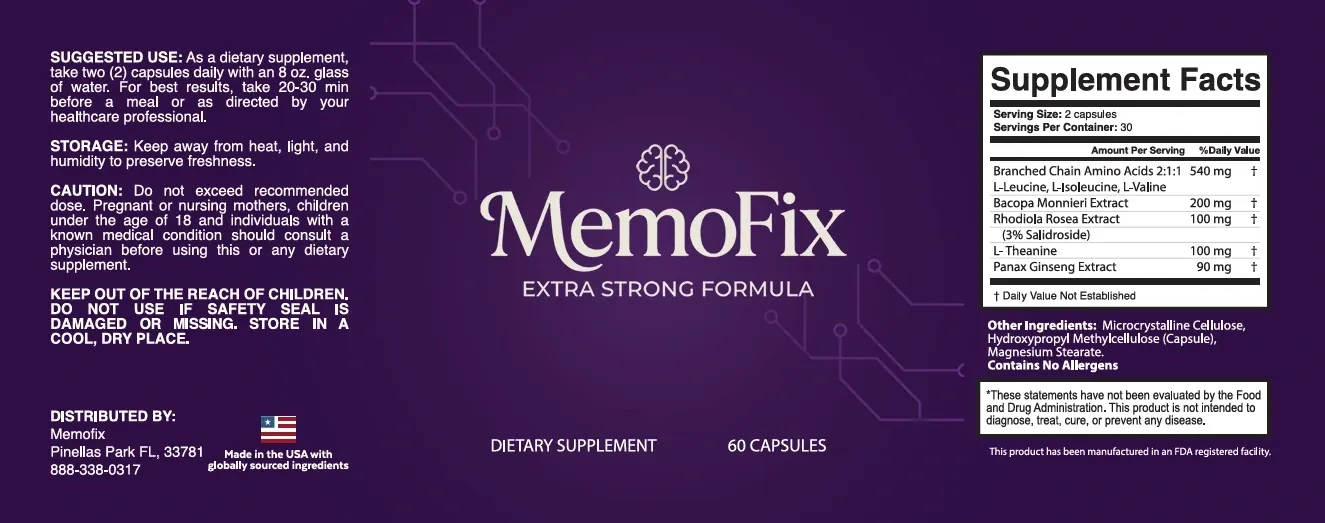
Side effects
Side effects reported for each Memofix ingredient, the medicine interactions to check, and the label cautions in full.
Read moreGinseng and your medicines
What Asian ginseng research shows, which medicines it may interact with, and questions to ask your pharmacist.
Read moreUSA Authorized Memofix Retailer
Ready to try Memofix with the 60-day guarantee?
Order through the authorized retailer's page so your order ID is on file with the refund desk. Two capsules a day; the 2-bottle pack covers the whole 60-day window.
Questions before you buy? Call +1 (302) 200-3480. 60-day money-back guarantee, return shipping paid by the buyer.